

PM – Rheumatology
PM - Rheumatology & Immunology
0 of 50 questions completed
Questions:
- 1
- 2
- 3
- 4
- 5
- 6
- 7
- 8
- 9
- 10
- 11
- 12
- 13
- 14
- 15
- 16
- 17
- 18
- 19
- 20
- 21
- 22
- 23
- 24
- 25
- 26
- 27
- 28
- 29
- 30
- 31
- 32
- 33
- 34
- 35
- 36
- 37
- 38
- 39
- 40
- 41
- 42
- 43
- 44
- 45
- 46
- 47
- 48
- 49
- 50
Information

You have already completed the Test before. Hence you can not start it again.
Test is loading...
You must sign in or sign up to start the Test.
You have to finish following quiz, to start this Test:
Your results are here!! for" PM - Rheumatology & Immunology "
0 of 50 questions answered correctly
Your time:
Time has elapsed
Your Final Score is : 0
You have attempted : 0
Number of Correct Questions : 0 and scored 0
Number of Incorrect Questions : 0 and Negative marks 0
| Average score |
|
| Your score |
|
-
Not categorized
You have attempted: 0
Number of Correct Questions: 0 and scored 0
Number of Incorrect Questions: 0 and Negative marks 0
-
Practice of Medicine
You have attempted: 0
Number of Correct Questions: 0 and scored 0
Number of Incorrect Questions: 0 and Negative marks 0
- 1
- 2
- 3
- 4
- 5
- 6
- 7
- 8
- 9
- 10
- 11
- 12
- 13
- 14
- 15
- 16
- 17
- 18
- 19
- 20
- 21
- 22
- 23
- 24
- 25
- 26
- 27
- 28
- 29
- 30
- 31
- 32
- 33
- 34
- 35
- 36
- 37
- 38
- 39
- 40
- 41
- 42
- 43
- 44
- 45
- 46
- 47
- 48
- 49
- 50
- Answered
- Review
-
Question 1 of 50
1. Question
The hallmark of rheumatoid arthritis is
Correct
The potential of the synovial inflammation to is the hallmark of the disease
Incorrect
The potential of the synovial inflammation to is the hallmark of the disease
Unattempted
The potential of the synovial inflammation to is the hallmark of the disease
-
Question 2 of 50
2. Question
Development of Lymphoma in Sjogren‘s syndrome is suggested by all of the following except
Correct
 Incorrect
Unattempted
-
Question 3 of 50
3. Question
All the following are features of Scleroderma except
Correct
Scleroderma (systemic sclerosis) is a chronic autoimmune connective tissue disorder characterized by excessive collagen deposition in the skin and internal organs.
Dysphagia: Common due to esophageal smooth muscle fibrosis and hypomotility.
Raynaud’s phenomenon: Very common, often an initial symptom.
Skin contracture: Results from skin thickening and fibrosis.
Calcification in all the long bones: Not a feature. While calcinosis cutis (localized calcium deposits in skin/subcutaneous tissue) can occur, generalized calcification of all long bones is not seen.
Incorrect
Scleroderma (systemic sclerosis) is a chronic autoimmune connective tissue disorder characterized by excessive collagen deposition in the skin and internal organs.
Dysphagia: Common due to esophageal smooth muscle fibrosis and hypomotility.
Raynaud’s phenomenon: Very common, often an initial symptom.
Skin contracture: Results from skin thickening and fibrosis.
Calcification in all the long bones: Not a feature. While calcinosis cutis (localized calcium deposits in skin/subcutaneous tissue) can occur, generalized calcification of all long bones is not seen.
Unattempted
Scleroderma (systemic sclerosis) is a chronic autoimmune connective tissue disorder characterized by excessive collagen deposition in the skin and internal organs.
Dysphagia: Common due to esophageal smooth muscle fibrosis and hypomotility.
Raynaud’s phenomenon: Very common, often an initial symptom.
Skin contracture: Results from skin thickening and fibrosis.
Calcification in all the long bones: Not a feature. While calcinosis cutis (localized calcium deposits in skin/subcutaneous tissue) can occur, generalized calcification of all long bones is not seen.
-
Question 4 of 50
4. Question
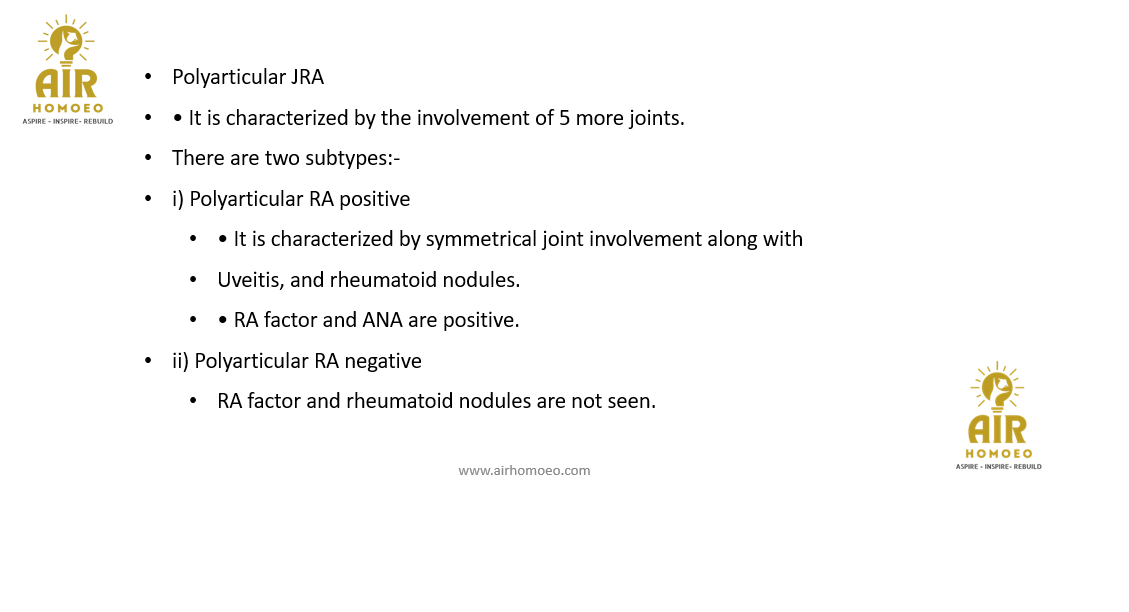
Polyarticular onset JRA involves more than how many joints
Correct
 Incorrect
Unattempted
-
Question 5 of 50
5. Question
Which of the following antibodies is highly specific for systemic lupus erythematosus –
Correct
 Incorrect
Unattempted
-
Question 6 of 50
6. Question
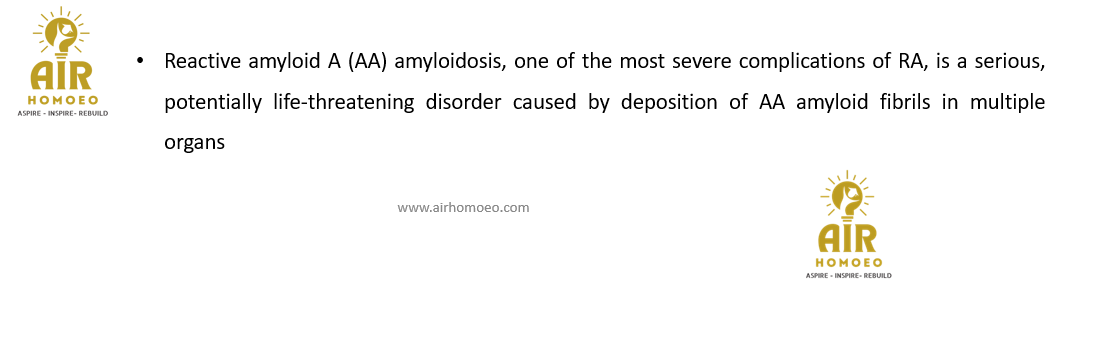
In long standing rheumatoid arthritis which will be seen –
Correct
 Incorrect
Unattempted
-
Question 7 of 50
7. Question
Mosaic pattern of cement line is characteristically seen in –
Correct
A “mosaic pattern of cement lines” typically refers to a histological appearance found in bone tissue affected by Paget‘s disease. This pattern is characterized by the presence of thick, irregularly shaped cement lines (also called cementum) that divide the bone into a mosaic-like structure. These lines demarcate randomly oriented lamellar bone, giving the tissue a disorganized and abnormal appearance
Incorrect
A “mosaic pattern of cement lines” typically refers to a histological appearance found in bone tissue affected by Paget‘s disease. This pattern is characterized by the presence of thick, irregularly shaped cement lines (also called cementum) that divide the bone into a mosaic-like structure. These lines demarcate randomly oriented lamellar bone, giving the tissue a disorganized and abnormal appearance
Unattempted
A “mosaic pattern of cement lines” typically refers to a histological appearance found in bone tissue affected by Paget‘s disease. This pattern is characterized by the presence of thick, irregularly shaped cement lines (also called cementum) that divide the bone into a mosaic-like structure. These lines demarcate randomly oriented lamellar bone, giving the tissue a disorganized and abnormal appearance
-
Question 8 of 50
8. Question
“Pathergy” Test is specific for
Correct
The Pathergy test is a diagnostic skin hyperreactivity test where a sterile needle prick leads to a papule or pustule formation within 24–48 hours.
It is highly specific for Behçet’s syndrome, which is a multisystem vasculitis characterized by recurrent oral and genital ulcers, uveitis, and skin lesions.
The phenomenon occurs due to exaggerated neutrophil-mediated inflammation.
Incorrect
The Pathergy test is a diagnostic skin hyperreactivity test where a sterile needle prick leads to a papule or pustule formation within 24–48 hours.
It is highly specific for Behçet’s syndrome, which is a multisystem vasculitis characterized by recurrent oral and genital ulcers, uveitis, and skin lesions.
The phenomenon occurs due to exaggerated neutrophil-mediated inflammation.
Unattempted
The Pathergy test is a diagnostic skin hyperreactivity test where a sterile needle prick leads to a papule or pustule formation within 24–48 hours.
It is highly specific for Behçet’s syndrome, which is a multisystem vasculitis characterized by recurrent oral and genital ulcers, uveitis, and skin lesions.
The phenomenon occurs due to exaggerated neutrophil-mediated inflammation.
-
Question 9 of 50
9. Question
Osteoporosis is seen in all the following except
Correct
 Incorrect
Unattempted
-
Question 10 of 50
10. Question
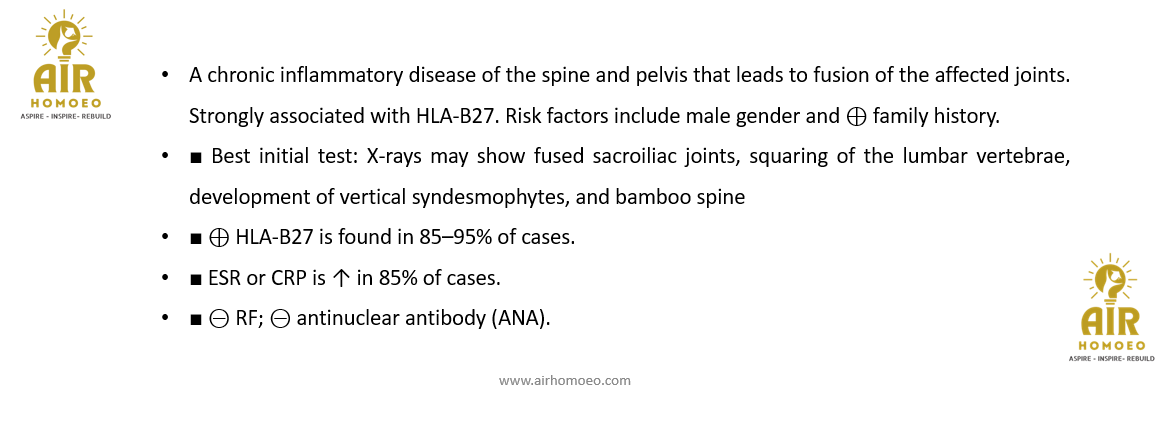
Bechterew disease also known as
Correct
 Incorrect
Unattempted
-
Question 11 of 50
11. Question
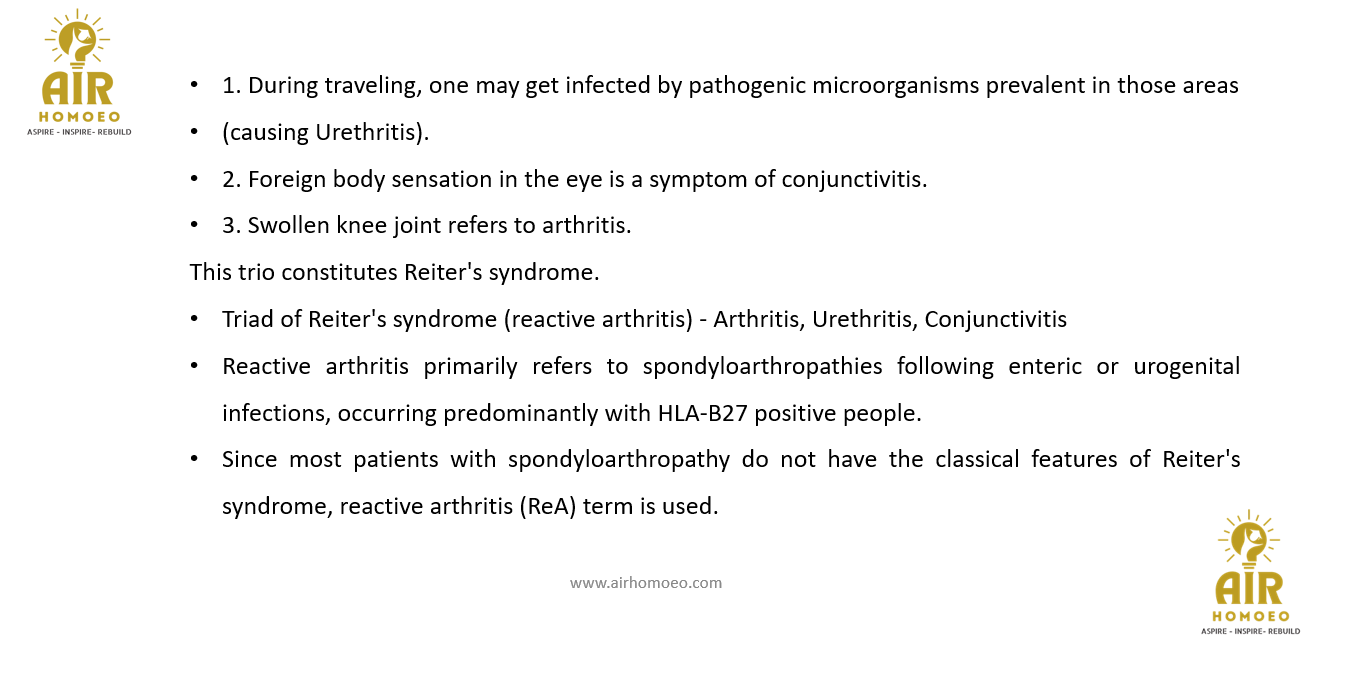
A patient presents with foreign body sensation in the eyes with swollen knee joint after a leisure trip. The most probable diagnosis is:
Correct
 Incorrect
Unattempted
-
Question 12 of 50
12. Question
Which one of the following is not a correct statement regarding Raynaud‘s disease?
Correct
Raynaud’s disease (primary Raynaud’s phenomenon) is an idiopathic vasospastic disorder that affects small arteries, usually of the fingers and toes.
It is more common in women, especially between ages 15–45 years.
Cold exposure or emotional stress precipitates vasoconstriction, leading to triphasic color change (white–blue–red).
Lower extremity involvement can occur but is usually asymmetrical or much less common compared to upper extremities; symmetrical lower limb involvement is not typical for primary Raynaud’s.
Incorrect
Raynaud’s disease (primary Raynaud’s phenomenon) is an idiopathic vasospastic disorder that affects small arteries, usually of the fingers and toes.
It is more common in women, especially between ages 15–45 years.
Cold exposure or emotional stress precipitates vasoconstriction, leading to triphasic color change (white–blue–red).
Lower extremity involvement can occur but is usually asymmetrical or much less common compared to upper extremities; symmetrical lower limb involvement is not typical for primary Raynaud’s.
Unattempted
Raynaud’s disease (primary Raynaud’s phenomenon) is an idiopathic vasospastic disorder that affects small arteries, usually of the fingers and toes.
It is more common in women, especially between ages 15–45 years.
Cold exposure or emotional stress precipitates vasoconstriction, leading to triphasic color change (white–blue–red).
Lower extremity involvement can occur but is usually asymmetrical or much less common compared to upper extremities; symmetrical lower limb involvement is not typical for primary Raynaud’s.
-
Question 13 of 50
13. Question
All of the following statements about primary Gout arthritis are true, Except
Correct
In primary gout, about 90% of cases are due to underexcretion of uric acid, not overproduction. Overproduction accounts for only ~10%.
Serum uric acid levels may be normal during an acute attack because the urate crystals are deposited in joints and soft tissues rather than circulating.
Gout has a male predominance (Male : Female ≈ 9:1 before menopause).
Definitive diagnosis is made by demonstrating negatively birefringent monosodium urate crystals in synovial fluid aspirate under polarized light microscopy.
Incorrect
In primary gout, about 90% of cases are due to underexcretion of uric acid, not overproduction. Overproduction accounts for only ~10%.
Serum uric acid levels may be normal during an acute attack because the urate crystals are deposited in joints and soft tissues rather than circulating.
Gout has a male predominance (Male : Female ≈ 9:1 before menopause).
Definitive diagnosis is made by demonstrating negatively birefringent monosodium urate crystals in synovial fluid aspirate under polarized light microscopy.
Unattempted
In primary gout, about 90% of cases are due to underexcretion of uric acid, not overproduction. Overproduction accounts for only ~10%.
Serum uric acid levels may be normal during an acute attack because the urate crystals are deposited in joints and soft tissues rather than circulating.
Gout has a male predominance (Male : Female ≈ 9:1 before menopause).
Definitive diagnosis is made by demonstrating negatively birefringent monosodium urate crystals in synovial fluid aspirate under polarized light microscopy.
-
Question 14 of 50
14. Question
Clubbing of a single digit may be found in all except
Correct
Clubbing of a single digit may follow trauma, in tophaceous gout and sarcoidosis. With advanced
lung disease, clubbing of digits appears in virtually all patients with CFIncorrect
Clubbing of a single digit may follow trauma, in tophaceous gout and sarcoidosis. With advanced
lung disease, clubbing of digits appears in virtually all patients with CFUnattempted
Clubbing of a single digit may follow trauma, in tophaceous gout and sarcoidosis. With advanced
lung disease, clubbing of digits appears in virtually all patients with CF -
Question 15 of 50
15. Question
Which of the following is true of psoriatic arthritis-
Correct
Psoriatic arthritis is a chronic inflammatory arthropathy associated with psoriasis, showing diverse clinical patterns.
Involves distal joints of hand and foot: The distal interphalangeal (DIP) joints are characteristically involved, especially in the DIP-predominant subtype.
Pencil-in-cup deformity: Radiographic hallmark caused by erosion of the phalangeal head and expansion of the base of the adjacent bone.
Sacroiliitis: May be unilateral or bilateral, part of the spondyloarthropathy spectrum.
Incorrect
Psoriatic arthritis is a chronic inflammatory arthropathy associated with psoriasis, showing diverse clinical patterns.
Involves distal joints of hand and foot: The distal interphalangeal (DIP) joints are characteristically involved, especially in the DIP-predominant subtype.
Pencil-in-cup deformity: Radiographic hallmark caused by erosion of the phalangeal head and expansion of the base of the adjacent bone.
Sacroiliitis: May be unilateral or bilateral, part of the spondyloarthropathy spectrum.
Unattempted
Psoriatic arthritis is a chronic inflammatory arthropathy associated with psoriasis, showing diverse clinical patterns.
Involves distal joints of hand and foot: The distal interphalangeal (DIP) joints are characteristically involved, especially in the DIP-predominant subtype.
Pencil-in-cup deformity: Radiographic hallmark caused by erosion of the phalangeal head and expansion of the base of the adjacent bone.
Sacroiliitis: May be unilateral or bilateral, part of the spondyloarthropathy spectrum.
-
Question 16 of 50
16. Question
Least common site to involved in osteoarthritis amongst the following is
Correct
Osteoarthritis (OA) commonly involves weight-bearing joints (knee, hip, spine) and joints subjected to repetitive stress (first carpometacarpal joint of thumb).
Knee joint is the most commonly affected, followed by hip joint and first CMC joint.
Metacarpophalangeal (MCP) joints are rarely affected in primary OA — they are more commonly involved in rheumatoid arthritis.
Therefore, among the listed options, MCP joint involvement is the least common in OA.
Incorrect
Osteoarthritis (OA) commonly involves weight-bearing joints (knee, hip, spine) and joints subjected to repetitive stress (first carpometacarpal joint of thumb).
Knee joint is the most commonly affected, followed by hip joint and first CMC joint.
Metacarpophalangeal (MCP) joints are rarely affected in primary OA — they are more commonly involved in rheumatoid arthritis.
Therefore, among the listed options, MCP joint involvement is the least common in OA.
Unattempted
Osteoarthritis (OA) commonly involves weight-bearing joints (knee, hip, spine) and joints subjected to repetitive stress (first carpometacarpal joint of thumb).
Knee joint is the most commonly affected, followed by hip joint and first CMC joint.
Metacarpophalangeal (MCP) joints are rarely affected in primary OA — they are more commonly involved in rheumatoid arthritis.
Therefore, among the listed options, MCP joint involvement is the least common in OA.
-
Question 17 of 50
17. Question
Presence of HLA-B27 is almost specific for diagnosis for:
Correct
 Incorrect
Unattempted
-
Question 18 of 50
18. Question
Acute Osteomyelitis usually begins at:
Correct
 Incorrect
Unattempted
-
Question 19 of 50
19. Question
In ‘Tennis elbow‘, pain occurs:
Correct
 Incorrect
Unattempted
-
Question 20 of 50
20. Question
Joint erosions are not a feature of –
Correct
Rheumatoid arthritis (RA): Classically causes marginal joint erosions due to pannus formation and synovial inflammation.
Psoriatic arthritis: Can cause erosive changes, especially in DIP joints (“pencil-in-cup” deformity).
Multicentric reticulohistiocytosis: Rare systemic disorder causing severe erosive polyarthritis along with skin lesions.
Systemic lupus erythematosus (SLE): Typically causes non-erosive arthritis despite marked joint pain and swelling. This is due to immune complex–mediated synovitis without pannus formation, leading to deformities (Jaccoud arthropathy) but without bone destruction.
Incorrect
Rheumatoid arthritis (RA): Classically causes marginal joint erosions due to pannus formation and synovial inflammation.
Psoriatic arthritis: Can cause erosive changes, especially in DIP joints (“pencil-in-cup” deformity).
Multicentric reticulohistiocytosis: Rare systemic disorder causing severe erosive polyarthritis along with skin lesions.
Systemic lupus erythematosus (SLE): Typically causes non-erosive arthritis despite marked joint pain and swelling. This is due to immune complex–mediated synovitis without pannus formation, leading to deformities (Jaccoud arthropathy) but without bone destruction.
Unattempted
Rheumatoid arthritis (RA): Classically causes marginal joint erosions due to pannus formation and synovial inflammation.
Psoriatic arthritis: Can cause erosive changes, especially in DIP joints (“pencil-in-cup” deformity).
Multicentric reticulohistiocytosis: Rare systemic disorder causing severe erosive polyarthritis along with skin lesions.
Systemic lupus erythematosus (SLE): Typically causes non-erosive arthritis despite marked joint pain and swelling. This is due to immune complex–mediated synovitis without pannus formation, leading to deformities (Jaccoud arthropathy) but without bone destruction.
-
Question 21 of 50
21. Question
Most common carcinoma associated with RA
Correct
 Incorrect
Unattempted
-
Question 22 of 50
22. Question
All may be associated with Sicca syndrome, except
Correct
Sicca syndrome refers to the triad of xerostomia (dry mouth), xerophthalmia (dry eyes), and sometimes dryness of other mucosal surfaces, usually due to autoimmune destruction of exocrine glands. It may occur as:
Primary Sjögren’s syndrome – isolated form.
Secondary Sjögren’s syndrome – associated with other autoimmune/connective tissue disorders.Common associations:
Rheumatoid arthritis ✅
Systemic sclerosis (scleroderma) ✅
Systemic lupus erythematosus ✅
Chronic active hepatitis (autoimmune hepatitis) ✅
Midline granuloma (now known as extranodal NK/T-cell lymphoma, nasal type) is not associated with Sicca syndrome — it is a destructive lesion of the nasal cavity, unrelated to autoimmune exocrinopathy.
Incorrect
Sicca syndrome refers to the triad of xerostomia (dry mouth), xerophthalmia (dry eyes), and sometimes dryness of other mucosal surfaces, usually due to autoimmune destruction of exocrine glands. It may occur as:
Primary Sjögren’s syndrome – isolated form.
Secondary Sjögren’s syndrome – associated with other autoimmune/connective tissue disorders.Common associations:
Rheumatoid arthritis ✅
Systemic sclerosis (scleroderma) ✅
Systemic lupus erythematosus ✅
Chronic active hepatitis (autoimmune hepatitis) ✅
Midline granuloma (now known as extranodal NK/T-cell lymphoma, nasal type) is not associated with Sicca syndrome — it is a destructive lesion of the nasal cavity, unrelated to autoimmune exocrinopathy.
Unattempted
Sicca syndrome refers to the triad of xerostomia (dry mouth), xerophthalmia (dry eyes), and sometimes dryness of other mucosal surfaces, usually due to autoimmune destruction of exocrine glands. It may occur as:
Primary Sjögren’s syndrome – isolated form.
Secondary Sjögren’s syndrome – associated with other autoimmune/connective tissue disorders.Common associations:
Rheumatoid arthritis ✅
Systemic sclerosis (scleroderma) ✅
Systemic lupus erythematosus ✅
Chronic active hepatitis (autoimmune hepatitis) ✅
Midline granuloma (now known as extranodal NK/T-cell lymphoma, nasal type) is not associated with Sicca syndrome — it is a destructive lesion of the nasal cavity, unrelated to autoimmune exocrinopathy.
-
Question 23 of 50
23. Question
Which group of muscles are affected mainly in inflammatory myopathies?
Correct
 Incorrect
Unattempted
-
Question 24 of 50
24. Question
C-ANCA associated with –
Correct
C-ANCA (cytoplasmic antineutrophil cytoplasmic antibodies) are most strongly associated with Wegener’s granulomatosis, now called Granulomatosis with polyangiitis (GPA). The target antigen is proteinase 3 (PR3).
Wegener’s granulomatosis (GPA) – Strong C-ANCA positivity ✅
Microscopic polyangiitis – More often p-ANCA (MPO) positive
Churg-Strauss syndrome (Eosinophilic granulomatosis with polyangiitis) – Usually p-ANCA
Polyarteritis nodosa (PAN) – Typically ANCA-negative
Incorrect
C-ANCA (cytoplasmic antineutrophil cytoplasmic antibodies) are most strongly associated with Wegener’s granulomatosis, now called Granulomatosis with polyangiitis (GPA). The target antigen is proteinase 3 (PR3).
Wegener’s granulomatosis (GPA) – Strong C-ANCA positivity ✅
Microscopic polyangiitis – More often p-ANCA (MPO) positive
Churg-Strauss syndrome (Eosinophilic granulomatosis with polyangiitis) – Usually p-ANCA
Polyarteritis nodosa (PAN) – Typically ANCA-negative
Unattempted
C-ANCA (cytoplasmic antineutrophil cytoplasmic antibodies) are most strongly associated with Wegener’s granulomatosis, now called Granulomatosis with polyangiitis (GPA). The target antigen is proteinase 3 (PR3).
Wegener’s granulomatosis (GPA) – Strong C-ANCA positivity ✅
Microscopic polyangiitis – More often p-ANCA (MPO) positive
Churg-Strauss syndrome (Eosinophilic granulomatosis with polyangiitis) – Usually p-ANCA
Polyarteritis nodosa (PAN) – Typically ANCA-negative
-
Question 25 of 50
25. Question
In anklyosing spondylitis joint involvement is least in?
Correct
 Incorrect
Unattempted
-
Question 26 of 50
26. Question
Kawasaki disease is associated with all of the following features except –
Correct
Kawasaki disease (mucocutaneous lymph node syndrome) is an acute, self-limited vasculitis of medium-sized arteries, predominantly affecting children younger than 5 years.
Classical features (per AHA criteria) include:
Fever lasting at least 5 days (mandatory criterion)
Bilateral non-exudative conjunctivitis
Changes in lips and oral cavity – erythema, strawberry tongue, cracked lips
Polymorphous rash or erythema
Cervical lymphadenopathy – usually unilateral and in the anterior cervical region, with nodes at least 1.5 cm in diameter
Changes in extremities – erythema, edema, periungual desquamation
Thrombocytosis is common in the subacute phase, not thrombocytopenia.
Incorrect
Kawasaki disease (mucocutaneous lymph node syndrome) is an acute, self-limited vasculitis of medium-sized arteries, predominantly affecting children younger than 5 years.
Classical features (per AHA criteria) include:
Fever lasting at least 5 days (mandatory criterion)
Bilateral non-exudative conjunctivitis
Changes in lips and oral cavity – erythema, strawberry tongue, cracked lips
Polymorphous rash or erythema
Cervical lymphadenopathy – usually unilateral and in the anterior cervical region, with nodes at least 1.5 cm in diameter
Changes in extremities – erythema, edema, periungual desquamation
Thrombocytosis is common in the subacute phase, not thrombocytopenia.
Unattempted
Kawasaki disease (mucocutaneous lymph node syndrome) is an acute, self-limited vasculitis of medium-sized arteries, predominantly affecting children younger than 5 years.
Classical features (per AHA criteria) include:
Fever lasting at least 5 days (mandatory criterion)
Bilateral non-exudative conjunctivitis
Changes in lips and oral cavity – erythema, strawberry tongue, cracked lips
Polymorphous rash or erythema
Cervical lymphadenopathy – usually unilateral and in the anterior cervical region, with nodes at least 1.5 cm in diameter
Changes in extremities – erythema, edema, periungual desquamation
Thrombocytosis is common in the subacute phase, not thrombocytopenia.
-
Question 27 of 50
27. Question
Disease that are shares genetic risk factors with IBD is
Correct
Diseases and genetic risk factors that are shared with IBD include rheumatoid arthritis (TNFAIP3),
psoriasis (IL23R,IL12B), ankylosing spondylitis (IL23R), type 1 diabetes mellitus (IL10,PTPN2),
asthma (ORMDL3), and systemic lupus erythematosus (TNFAIP3,IL10).Incorrect
Diseases and genetic risk factors that are shared with IBD include rheumatoid arthritis (TNFAIP3),
psoriasis (IL23R,IL12B), ankylosing spondylitis (IL23R), type 1 diabetes mellitus (IL10,PTPN2),
asthma (ORMDL3), and systemic lupus erythematosus (TNFAIP3,IL10).Unattempted
Diseases and genetic risk factors that are shared with IBD include rheumatoid arthritis (TNFAIP3),
psoriasis (IL23R,IL12B), ankylosing spondylitis (IL23R), type 1 diabetes mellitus (IL10,PTPN2),
asthma (ORMDL3), and systemic lupus erythematosus (TNFAIP3,IL10). -
Question 28 of 50
28. Question
Poncet’s disease refers to
Correct
Poncet’s disease is a reactive symmetric form of polyarthritis that affects persons with visceral
or disseminated tuberculosis. No mycobacteria are found in the joints, and symptoms resolve with
antituberculous therapy.Incorrect
Poncet’s disease is a reactive symmetric form of polyarthritis that affects persons with visceral
or disseminated tuberculosis. No mycobacteria are found in the joints, and symptoms resolve with
antituberculous therapy.Unattempted
Poncet’s disease is a reactive symmetric form of polyarthritis that affects persons with visceral
or disseminated tuberculosis. No mycobacteria are found in the joints, and symptoms resolve with
antituberculous therapy. -
Question 29 of 50
29. Question
Felty’s syndrome consists of all except
Correct
Felty’s syndrome consists of chronic RA, splenomegaly, neutropenia, anemia & thrombocytopenia.
Incorrect
Felty’s syndrome consists of chronic RA, splenomegaly, neutropenia, anemia & thrombocytopenia.
Unattempted
Felty’s syndrome consists of chronic RA, splenomegaly, neutropenia, anemia & thrombocytopenia.
-
Question 30 of 50
30. Question
The primary pathology in athletic pubalgia is:
Correct
 Incorrect
Unattempted
-
Question 31 of 50
31. Question
Most common bone fracture in body is:
Correct
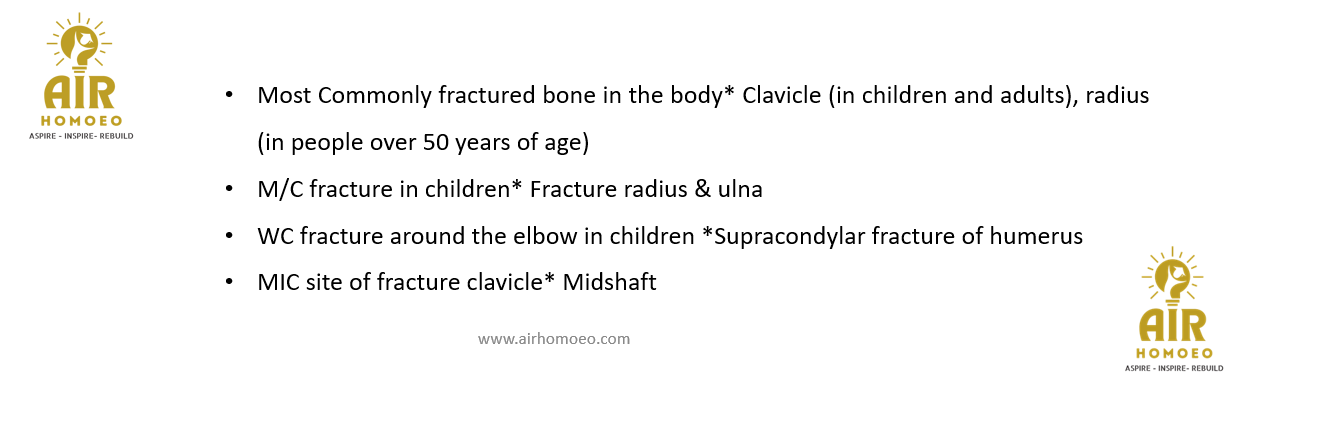 Incorrect
Unattempted
-
Question 32 of 50
32. Question
Classic triad of cryoglobulinemic syndrome includes all except
Correct
Classic triad of cryoglobulinemic syndrome consists of purpura, arthralgias & weakness. Others are
glomerulonephritis, peripheral neuropathy, generalized vasculitis, livedo reticularis, ischemic ulcers,
acrocyanosis and hemorrhagic bullae.Incorrect
Classic triad of cryoglobulinemic syndrome consists of purpura, arthralgias & weakness. Others are
glomerulonephritis, peripheral neuropathy, generalized vasculitis, livedo reticularis, ischemic ulcers,
acrocyanosis and hemorrhagic bullae.Unattempted
Classic triad of cryoglobulinemic syndrome consists of purpura, arthralgias & weakness. Others are
glomerulonephritis, peripheral neuropathy, generalized vasculitis, livedo reticularis, ischemic ulcers,
acrocyanosis and hemorrhagic bullae. -
Question 33 of 50
33. Question
CREST syndrome includes all except
Correct
CREST syndrome includes Calcinosis, Raynaud’s phenomenon, Esophageal involvement,
Sclerodactyly, and Telangiectasia.Incorrect
CREST syndrome includes Calcinosis, Raynaud’s phenomenon, Esophageal involvement,
Sclerodactyly, and Telangiectasia.Unattempted
CREST syndrome includes Calcinosis, Raynaud’s phenomenon, Esophageal involvement,
Sclerodactyly, and Telangiectasia. -
Question 34 of 50
34. Question
The joint which is NOT commonly involved in patients of Rheumatoid Arthritis is:
Correct
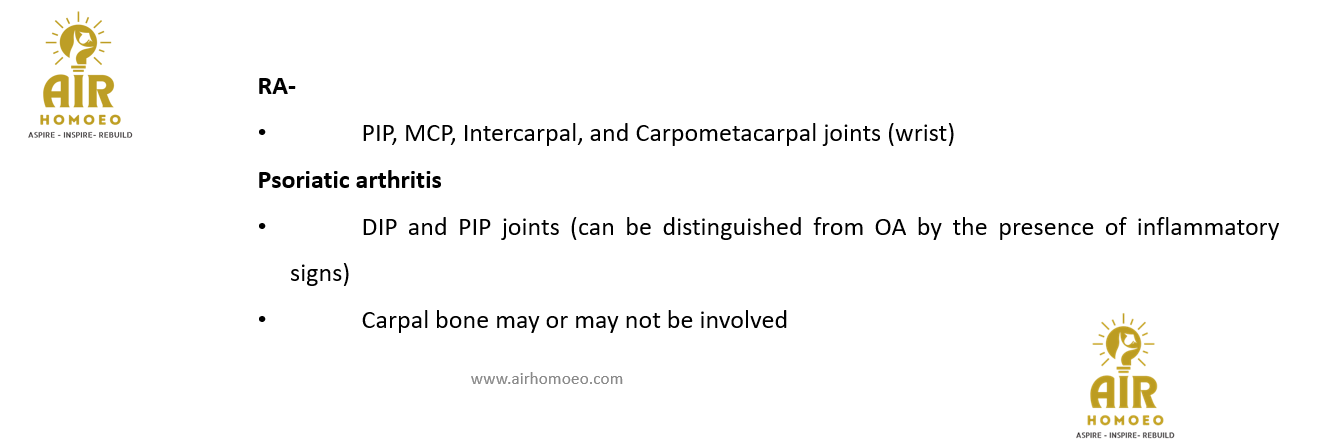 Incorrect
Unattempted
-
Question 35 of 50
35. Question
All of the following structures contribute to joint pain in osteoarthritis EXCEPT
Correct
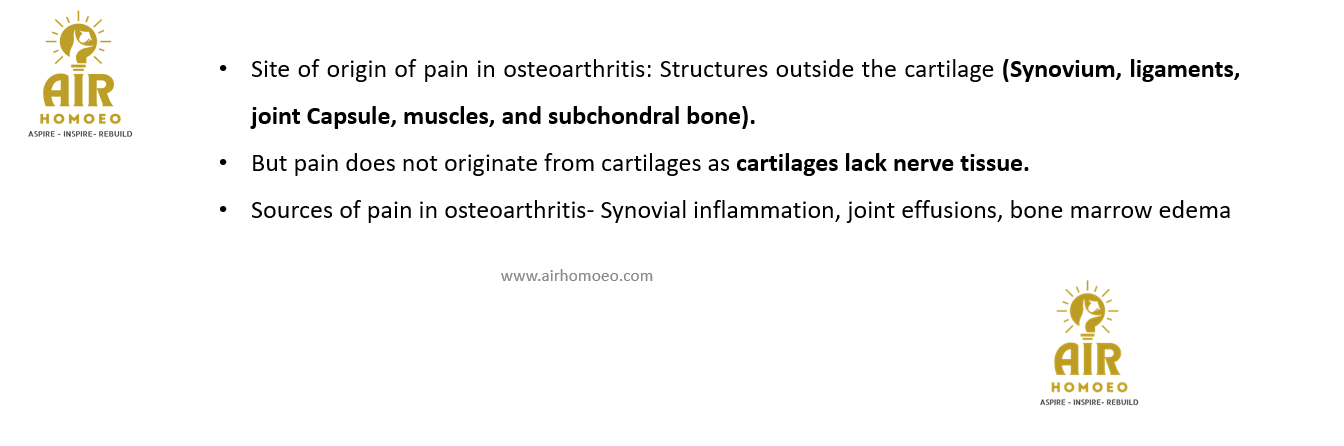 Incorrect
Unattempted
-
Question 36 of 50
36. Question
Gottron‘s sign is found in patients of:
Correct
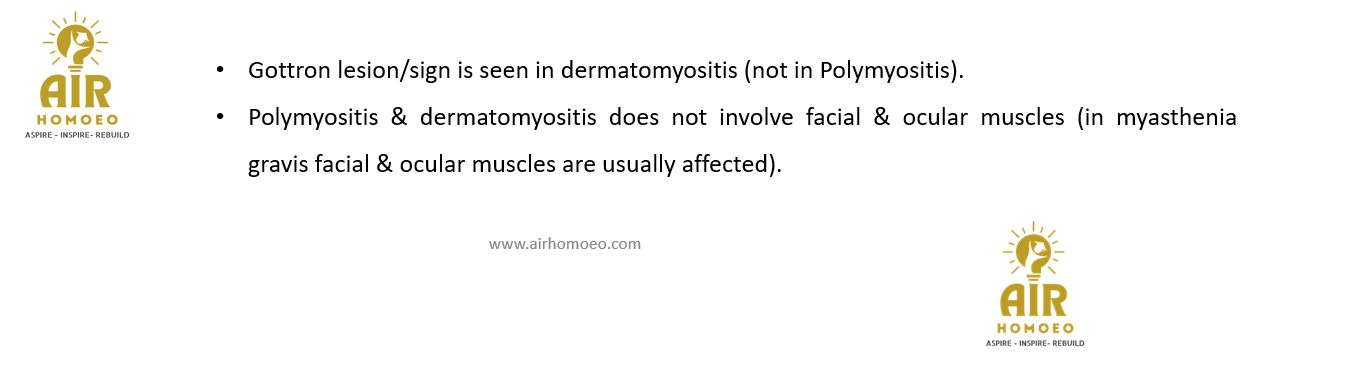 Incorrect
Unattempted
-
Question 37 of 50
37. Question
Histopathological lesion of which of the following environment associated disease is similar to sarcoidosis
Correct
Beryllium is commonly associated with a chronic granulomatous inflammatory disease that is similar to sarcoidosis. Hilar adenopathy is less common though.
Incorrect
Beryllium is commonly associated with a chronic granulomatous inflammatory disease that is similar to sarcoidosis. Hilar adenopathy is less common though.
Unattempted
Beryllium is commonly associated with a chronic granulomatous inflammatory disease that is similar to sarcoidosis. Hilar adenopathy is less common though.
-
Question 38 of 50
38. Question
Iridocyclitis is a feature of
Correct
Iridocyclitis is a feature of Behçet’s syndrome
Incorrect
Iridocyclitis is a feature of Behçet’s syndrome
Unattempted
Iridocyclitis is a feature of Behçet’s syndrome
-
Question 39 of 50
39. Question
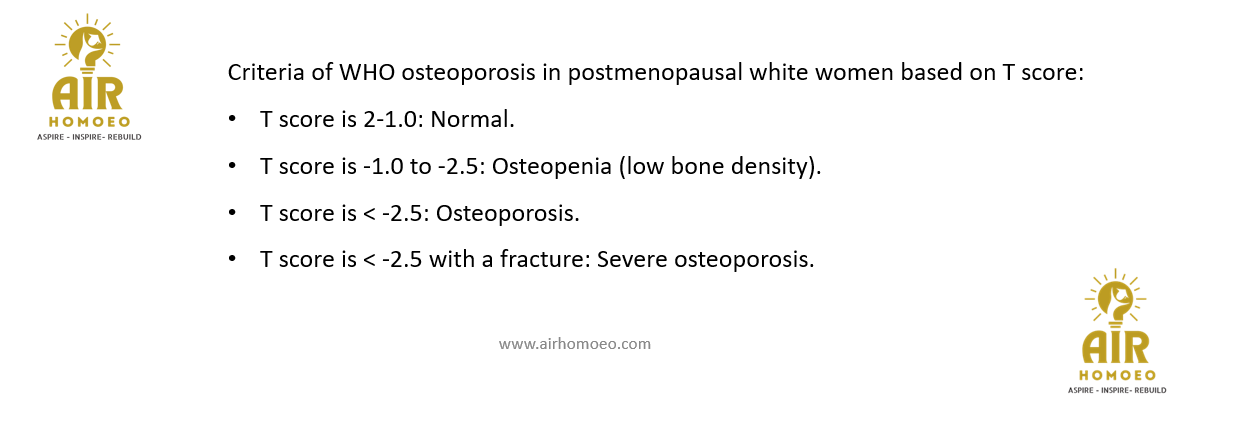
Which of the following finding is consistent with Osteopenia?
Correct
 Incorrect
Unattempted
-
Question 40 of 50
40. Question
Which of the following practice is NOT advocated in prevention of Gout?
Correct
 Incorrect
Unattempted
-
Question 41 of 50
41. Question
“Flitting joint pain” or migratory polyarthritis seen in?
Correct
 Incorrect
Unattempted
-
Question 42 of 50
42. Question
Rheumatoid factor can be detected in
Correct
Rheumatoid factor testing suffers from low specificity, since it can be detected in bacterial
endocarditis, malaria, tuberculosis, osteomyelitis, hepatitis C (with or without cryoglobulinemia),
SjÖgren syndrome, systemic lupus erythematosus, primary biliary cirrhosis, postvaccination
arthropathy, and aging.Incorrect
Rheumatoid factor testing suffers from low specificity, since it can be detected in bacterial
endocarditis, malaria, tuberculosis, osteomyelitis, hepatitis C (with or without cryoglobulinemia),
SjÖgren syndrome, systemic lupus erythematosus, primary biliary cirrhosis, postvaccination
arthropathy, and aging.Unattempted
Rheumatoid factor testing suffers from low specificity, since it can be detected in bacterial
endocarditis, malaria, tuberculosis, osteomyelitis, hepatitis C (with or without cryoglobulinemia),
SjÖgren syndrome, systemic lupus erythematosus, primary biliary cirrhosis, postvaccination
arthropathy, and aging. -
Question 43 of 50
43. Question
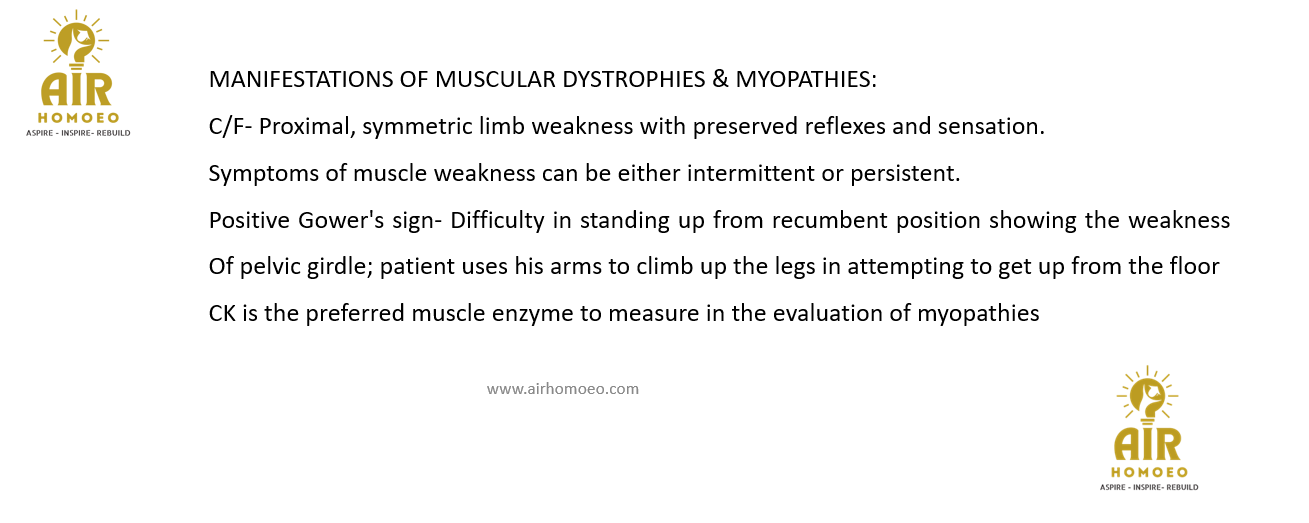
An 11-year-old girl presents with the following complaints
1. Difficulty in climbing upstairs and combing her hair
2. Maculopapular rash over MCP joints
3. Gower‘s sign Positive.
The most appropriate investigation to be advised is:Correct
 Incorrect
Unattempted
-
Question 44 of 50
44. Question
Which of the following is a Primary Vasculitis Syndrome
Correct
Primary vasculitis syndromes include Wegener’s granulomatosis, Churg-Strauss syndrome,
Henoch-Schönlein purpura, Polyarteritis nodosa, Microscopic polyangiitis, Giant cell arteritis,
Takayasu’s arteritis, Idiopathic cutaneous vasculitis, Essential mixed cryoglobulinemia, Behçet’s
syndrome, Isolated vasculitis of CNS, Cogan’s syndrome & Kawasaki disease.Incorrect
Primary vasculitis syndromes include Wegener’s granulomatosis, Churg-Strauss syndrome,
Henoch-Schönlein purpura, Polyarteritis nodosa, Microscopic polyangiitis, Giant cell arteritis,
Takayasu’s arteritis, Idiopathic cutaneous vasculitis, Essential mixed cryoglobulinemia, Behçet’s
syndrome, Isolated vasculitis of CNS, Cogan’s syndrome & Kawasaki disease.Unattempted
Primary vasculitis syndromes include Wegener’s granulomatosis, Churg-Strauss syndrome,
Henoch-Schönlein purpura, Polyarteritis nodosa, Microscopic polyangiitis, Giant cell arteritis,
Takayasu’s arteritis, Idiopathic cutaneous vasculitis, Essential mixed cryoglobulinemia, Behçet’s
syndrome, Isolated vasculitis of CNS, Cogan’s syndrome & Kawasaki disease. -
Question 45 of 50
45. Question
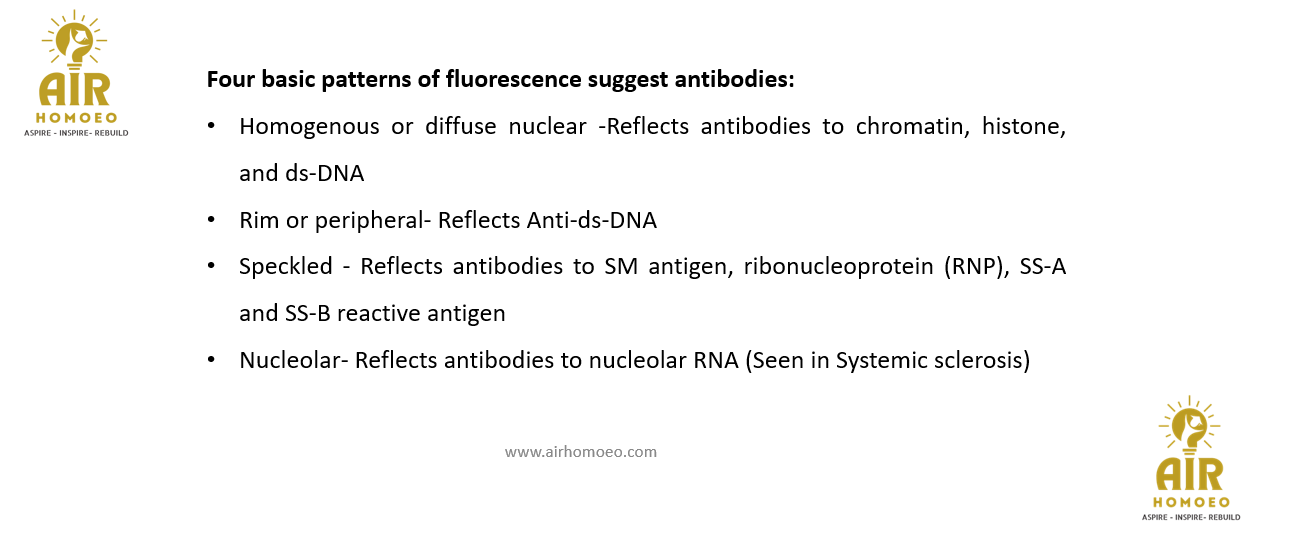
Speckled pattern seen in:
Correct
 Incorrect
Unattempted
-
Question 46 of 50
46. Question
A 45 year old coal mine worker presents with cutaneous nodules, joint pain and occasional cough with dyspnoea. His chest radiograph shows multiple small (I -4 cm) nodules in bilateral lung fields. Some of the nodules show cavitation and specks of calcification. Most likely these features are diagnostic of –
Correct
The patient is a coal mine worker, which raises suspicion for pneumoconiosis.
Caplan’s syndrome is characterized by the association of rheumatoid arthritis with pneumoconiosis (most commonly coal worker’s pneumoconiosis or silicosis), producing multiple well-defined nodules (0.5–5 cm) in both lungs.
These nodules may cavitate and often show central calcification.
The combination of exposure history, pulmonary nodules, and rheumatoid features (joint pain) strongly supports this diagnosis.
Incorrect
The patient is a coal mine worker, which raises suspicion for pneumoconiosis.
Caplan’s syndrome is characterized by the association of rheumatoid arthritis with pneumoconiosis (most commonly coal worker’s pneumoconiosis or silicosis), producing multiple well-defined nodules (0.5–5 cm) in both lungs.
These nodules may cavitate and often show central calcification.
The combination of exposure history, pulmonary nodules, and rheumatoid features (joint pain) strongly supports this diagnosis.
Unattempted
The patient is a coal mine worker, which raises suspicion for pneumoconiosis.
Caplan’s syndrome is characterized by the association of rheumatoid arthritis with pneumoconiosis (most commonly coal worker’s pneumoconiosis or silicosis), producing multiple well-defined nodules (0.5–5 cm) in both lungs.
These nodules may cavitate and often show central calcification.
The combination of exposure history, pulmonary nodules, and rheumatoid features (joint pain) strongly supports this diagnosis.
-
Question 47 of 50
47. Question
Ankylosing spondylitis is characterized by all EXCEPT:
Correct
 Incorrect
Unattempted
-
Question 48 of 50
48. Question
“String of beads” appearance on angiography is characteristic of
Correct
“String of beads” appearance on angiography is characteristic of fibromuscular dysplasia caused by
thickened fibromuscular ridges contiguous with thin, less-involved portions of the arterial wall.Incorrect
“String of beads” appearance on angiography is characteristic of fibromuscular dysplasia caused by
thickened fibromuscular ridges contiguous with thin, less-involved portions of the arterial wall.Unattempted
“String of beads” appearance on angiography is characteristic of fibromuscular dysplasia caused by
thickened fibromuscular ridges contiguous with thin, less-involved portions of the arterial wall. -
Question 49 of 50
49. Question
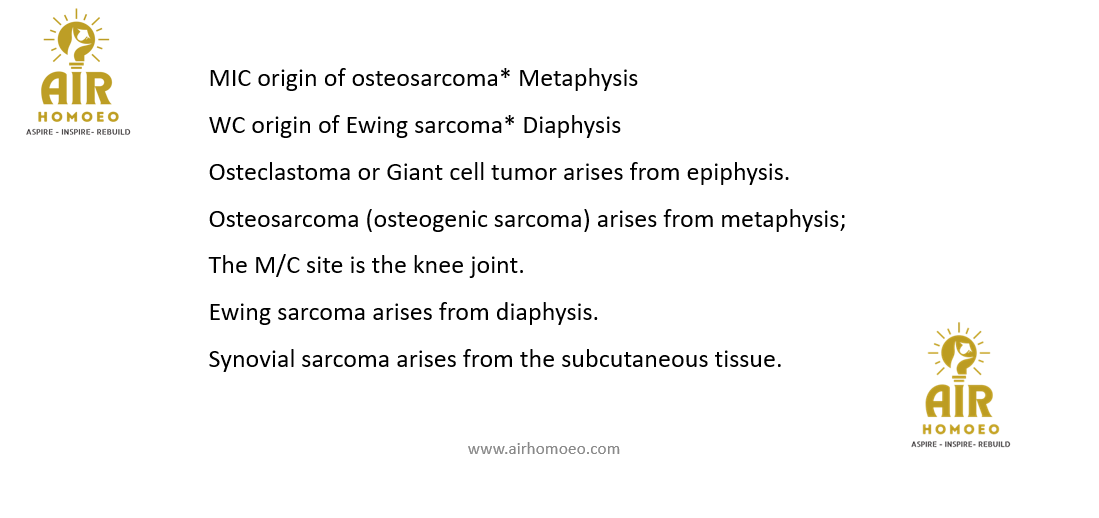
MC tumor arising from the metaphysis is:
Correct
 Incorrect
Unattempted
-
Question 50 of 50
50. Question
Which part of the spine is most commonly affected in Rheumatoid arthritis?
Correct
Rheumatoid arthritis (RA) primarily affects synovial joints, and in the spine, it most often involves the cervical spine, particularly the atlantoaxial (C1–C2) joint.
Involvement leads to atlantoaxial subluxation, which can cause spinal cord compression if severe.
Lumbar, thoracic, and sacral regions are rarely involved in RA, as the disease favors joints with abundant synovium, and these areas have less or no typical synovial joints.
Incorrect
Rheumatoid arthritis (RA) primarily affects synovial joints, and in the spine, it most often involves the cervical spine, particularly the atlantoaxial (C1–C2) joint.
Involvement leads to atlantoaxial subluxation, which can cause spinal cord compression if severe.
Lumbar, thoracic, and sacral regions are rarely involved in RA, as the disease favors joints with abundant synovium, and these areas have less or no typical synovial joints.
Unattempted
Rheumatoid arthritis (RA) primarily affects synovial joints, and in the spine, it most often involves the cervical spine, particularly the atlantoaxial (C1–C2) joint.
Involvement leads to atlantoaxial subluxation, which can cause spinal cord compression if severe.
Lumbar, thoracic, and sacral regions are rarely involved in RA, as the disease favors joints with abundant synovium, and these areas have less or no typical synovial joints.